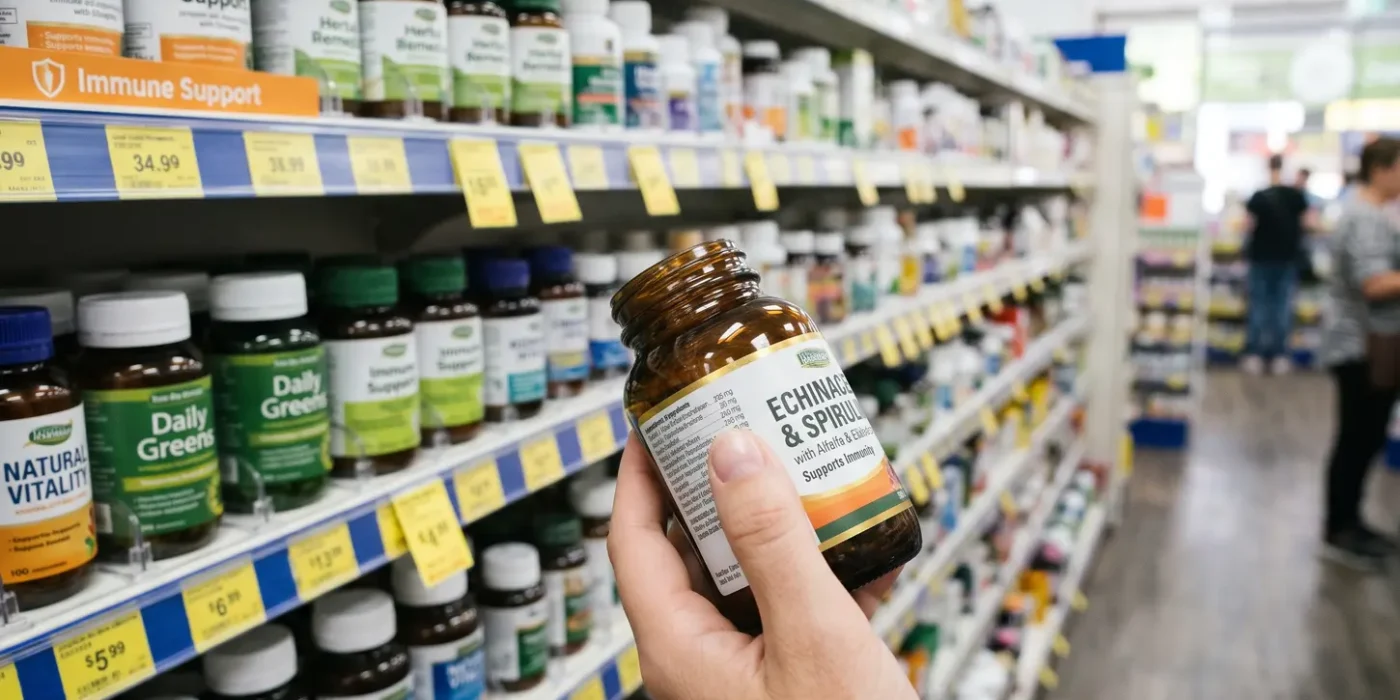
Walk down the vitamin aisle of any Australian chemist and you’ll see the same promise printed on bottle after bottle: supports immunity. For most people, that’s a selling point. For someone living with lupus, it can be the very thing to steer clear of.
Lupus is an autoimmune condition, which means the immune system is already working too hard, and aiming at the body’s own tissues. Anything that revs it up further has the potential to make things worse. On top of that, many people with lupus take medicines like hydroxychloroquine, prednisolone, methotrexate or mycophenolate, and some supplements can quietly change how well those medicines work.
The short answer: the main supplements to avoid with lupus are immune-stimulating products (echinacea, alfalfa, spirulina, chlorella, blue-green algae and elderberry), St John’s wort, high-dose garlic supplements, and any supplement that clashes with your prescribed medication, such as licorice root alongside steroids or high-dose fish oil and ginkgo alongside blood thinners. Hormone supplements such as DHEA should only ever be used under medical supervision.
Below, we break down each one, explain why it’s a concern, and share a simple checklist you can use before you add anything new to your routine. If you’re also looking at your plate, we cover everything you need to know about foods to avoid if you have lupus in a separate guide.
Why Supplements Need Extra Care When You Have Lupus
Supplements are popular with people who have lupus, and it’s easy to see why. Fatigue, joint aches and the side effects of long-term medication leave many people looking for something extra. In one University of Pennsylvania study, 36% of people with cutaneous (skin) lupus reported using herbal supplements.
The trouble is that “natural” and “safe for lupus” aren’t the same thing. There are three main ways a supplement can cause problems:
- It stimulates the immune system. Lupus involves an overactive immune response. Products sold to “boost immunity” can, in some people, add fuel to that fire and contribute to a flare.
- It interacts with your medication. Some herbs speed up how fast the liver clears a drug, so the drug stops working as well. Others add to a drug’s side effects, such as bleeding risk or raised blood pressure.
- It increases sun sensitivity. Many people with lupus are already photosensitive. A supplement that makes skin react more strongly to UV light is a risk you don’t need.
None of this means supplements are off the table. It means the judgement call about what suits you sits with you and your healthcare team, not the front of a bottle.
Immune-Boosting Supplements to Avoid With Lupus
This is the group specialists warn about most often. A growing body of lab work, along with case reports of people whose autoimmune disease started or flared after taking these products, points to a handful of herbs and algae that switch on immune cells along the same pathways that are already overactive in lupus.
Echinacea
Echinacea is one of the most familiar cold and flu remedies on Australian shelves, which is exactly why it catches people out. It’s taken to strengthen the immune response, and the Johns Hopkins Lupus Center lists it among the five things people with lupus should avoid because of its potential to trigger flares. Some European echinacea products even carry label warnings against use in autoimmune disease.
If you reach for a cold-and-flu formula each winter, check the ingredient list. Echinacea is often blended with vitamin C and zinc rather than sold on its own.
Alfalfa (Tablets, Sprouts and Green Blends)
Alfalfa contains an amino acid called L-canavanine, which has been linked to lupus-like illness and flares. Johns Hopkins advises people with lupus to avoid alfalfa sprouts completely, and the same logic applies, even more so, to alfalfa tablets, which deliver a concentrated dose. There’s a published case of systemic lupus activating after alfalfa ingestion.
Alfalfa also turns up where you might not expect it: in “superfood” greens powders, detox blends and some multivitamins marketed as wholefood-based.
Spirulina, Chlorella and Blue-Green Algae
These algae supplements are sold as nutrient-dense health foods, often in the same greens powders as alfalfa. Laboratory research from the University of Pennsylvania found that spirulina significantly stimulates inflammatory protein production in immune cells, and dermatologists have reported autoimmune disease starting or worsening after people began taking spirulina and other algae products.
If your morning smoothie includes a green powder, read the label carefully. Spirulina, chlorella and Aphanizomenon flos-aquae (AFA) are all in this group.
Elderberry
Elderberry syrups and gummies became hugely popular during the COVID-19 pandemic. In a 2024 study of people with autoimmune skin conditions, elderberry stood out as the herbal supplement most associated with disease flares.
Ashwagandha and Tongkat Ali
Both are sold in Australian health stores for stress, energy and vitality. Researchers studying autoimmune skin disease now include them in their screening list of immune-stimulating herbs, alongside echinacea and spirulina. The evidence here is still emerging, but if you have lupus, they belong in the “check first” pile rather than the shopping basket.
Garlic Supplements
Johns Hopkins also lists garlic among the things to avoid with lupus, because compounds in garlic can boost immune cell activity. A little garlic in your cooking is a different matter from a high-strength garlic capsule taken every day. Concentrated garlic supplements also thin the blood slightly, which matters if you’re on an anticoagulant.
Supplements That Make You More Sensitive to the Sun
UV light is one of the best-known lupus triggers. Johns Hopkins puts sunlight at the top of its list of things to avoid, because it can cause rashes and set off wider flares. Under the Australian sun, that’s already a daily consideration. Adding a supplement that makes your skin more reactive only stacks the odds against you.
St John’s Wort
St John’s wort is sold for low mood and is easy to buy without a prescription. It’s also one of the most interaction-prone supplements on the market. Increased sensitivity to sunlight is a recognised side effect, and some product information lists known skin photosensitivity as a reason not to take it at all.
That’s only half the story. St John’s wort speeds up the liver enzymes that clear many medicines from the body. The TGA warns that it can lower blood levels of ciclosporin and tacrolimus, both used in some lupus treatment plans, and it also reduces the effect of warfarin and the oral contraceptive pill. For most people with lupus, it’s simply not worth the risk.
Dong Quai
Dong quai (Angelica sinensis) is a traditional Chinese herb often sold for menstrual and menopausal symptoms. It contains natural coumarin compounds that can cause photosensitivity reactions. Those same compounds can intensify blood thinners; in one documented case, a woman on warfarin saw her clotting time more than double after four weeks of dong quai. It also has weak oestrogen-like activity, which brings us to the next group.
Hormone-Active Supplements: Use Only Under Medical Supervision
Lupus affects women far more often than men, and hormones are thought to play a part in why. That makes any supplement designed to shift hormone levels worth extra caution.
DHEA
DHEA (dehydroepiandrosterone) is an interesting case, because it isn’t a straightforward “avoid”. Prescription-grade DHEA, called prasterone, was studied as a lupus treatment in several clinical trials, and some women with active lupus did better on it than on placebo.
But the same trials show why it’s not a DIY supplement. In one large study, acne affected 33% of women taking prasterone compared with 14% on placebo, and excess hair growth (hirsutism) affected 16% compared with 2%. DHEA also raised testosterone levels and lowered HDL (“good”) cholesterol. In Australia, DHEA is a prescription-only medicine, so the bottles sold on overseas websites aren’t a legal or safe shortcut. If you’re curious about it, that’s a conversation for your rheumatologist.
Concentrated Phytoestrogen Products
Phytoestrogens are plant compounds with weak oestrogen-like effects, found in high-dose soy isoflavone capsules, red clover and dong quai. They’re often sold for menopause. The evidence on how they affect lupus is limited, which is exactly the point: a soy latte is ordinary food, but a concentrated hormone-active supplement is a different proposition. Raise it with your doctor first, particularly if you’ve been told to avoid oestrogen-containing medicines.
Supplements That Clash With Common Lupus Medications
For many people, the bigger risk isn’t the supplement on its own. It’s what happens when that supplement meets the medicines keeping lupus under control. Here are the combinations most worth knowing about.
| If you take… | Supplements to flag | Why it matters |
| Prednisolone or other corticosteroids | Licorice root (not DGL licorice) | Glycyrrhizin in licorice slows how fast the body clears prednisolone, raising its levels. Licorice can also push blood pressure up and potassium down on its own, which adds to steroid side effects. |
| Warfarin or other blood thinners (common with antiphospholipid syndrome) | Dong quai, ginkgo, high-dose fish oil, turmeric or curcumin extracts, garlic capsules, St John’s wort, vitamin K | Some increase bleeding risk; St John’s wort and vitamin K can make warfarin less effective. If you take warfarin, either effect can push your INR out of range. |
| Ciclosporin or tacrolimus | St John’s wort | It can lower blood levels of these medicines, which the TGA flags as a clinically important interaction. |
| Hydroxychloroquine | Antacids | Antacids can reduce how much hydroxychloroquine you absorb. Ask your pharmacist how far apart to space them. |
| Mycophenolate | Antacids containing magnesium or aluminium | These can reduce absorption of mycophenolate. Spacing the doses usually solves it, but check first. |
| Any immunosuppressant | Echinacea, spirulina, chlorella, elderberry, alfalfa | These aim to stimulate the immune system, which works directly against medicines designed to calm it down. |
A special word on licorice, given our focus on traditional Asian remedies. Licorice root (gan cao) is one of the most frequently used ingredients in traditional Chinese herbal formulas, where it’s added to harmonise other herbs. That means it can turn up in blended teas and formulas even when it isn’t the headline ingredient. If you take prednisolone, always ask for a full ingredient list.
If you’re on any of these medicines, your pharmacist can usually check a supplement for interactions while you wait. We take a closer look at natural remedies for lupus and how they sit alongside medical care in a separate guide.
Supplements That Need a Conversation, Not a Blanket Ban
Not every supplement on a lupus warning list deserves to be there. Some appear because of a theoretical concern or a single small study. These ones are worth discussing with your doctor rather than ruling out on your own.
- Zinc. Zinc supports normal immune function, which is why it’s added to so many cold and flu products. Correcting a genuine deficiency is reasonable; long-term high doses taken “for immunity” are harder to justify with lupus. Watch for zinc hidden in immune-support blends that also contain echinacea.
- Melatonin. Sleep problems are common with lupus, and melatonin has some immune-modulating effects in the lab. In Australia it’s prescription-only, apart from a low-dose modified-release form available from pharmacists for people aged 55 and over, so a health professional will be involved anyway. Mention your lupus when you ask.
- Turmeric and curcumin. Turmeric in cooking is fine for most people. Concentrated curcumin extracts are a different product: they can add to bleeding risk alongside blood thinners and have been linked to rare cases of liver injury. Check before you start, especially if you take methotrexate, which also affects the liver.
- High-dose vitamin E. Some lupus guides list it as an immune stimulant. At high doses it can also increase bleeding risk with anticoagulants. A standard multivitamin is a very different thing from a 1,000 IU capsule.
The common thread is dose and context. A nutrient in your food is rarely the problem. A concentrated extract, taken every day, alongside strong prescription medicines, is where things get complicated.
Supplements Your Doctor May Actually Recommend
This article is about what to avoid, but it would be misleading to suggest every supplement is off-limits. Several are commonly recommended for people with lupus, usually after a blood test.
- Vitamin D. Sun protection is essential with lupus, which makes low vitamin D common. In the large VITAL trial of older adults, taking vitamin D for about five years lowered the rate of new autoimmune disease by 22% compared with placebo. That’s prevention rather than lupus treatment, but it’s one reason doctors keep an eye on levels. If you have lupus, ask for your levels to be checked rather than guessing at a dose.
- Calcium. Long-term corticosteroids can thin the bones. Johns Hopkins notes that people with osteoporosis or osteopenia are usually advised to take calcium and vitamin D alongside their bone medication.
- Omega-3 fish oil. Fish oil has been studied in lupus for its effects on inflammation and heart health, which matters because lupus raises cardiovascular risk. Standard doses are generally considered safe, but high doses add to bleeding risk with blood thinners.
- Folic acid. If you take methotrexate, your doctor will usually prescribe folic acid to reduce side effects. That’s one supplement you shouldn’t skip.
The difference between these and the supplements above is simple: they’re chosen for a known reason, at a set dose, with your treatment plan in mind. Pair them with the right movement, too. We cover everything you need to know about exercises to avoid with lupus in a separate guide.
How to Check a Supplement Before You Take It
You don’t need to memorise every herb on this page. A simple routine will catch most problems before they start.
- Read the full ingredient list, not the front label. Blends hide a lot. “Immune support”, “greens”, “detox” and “vitality” products are the ones most likely to contain echinacea, alfalfa, spirulina, chlorella or elderberry.
- Take the bottle to your pharmacist. Bring the actual product, not just the name. They can check it against everything you’re prescribed.
- Tell your rheumatologist or GP. Mention every supplement at each review, including teas and powders. It helps them interpret changes in your bloods or symptoms.
- Start one thing at a time. If you add three supplements in the same week and then flare, you’ll never know which one to blame. Give each new product a few weeks and keep a simple symptom diary.
- Stop and check if something changes. New rashes, sun sensitivity, unusual bruising, swelling or a sudden flare after starting a supplement are worth reporting promptly.
A Natural Option That Respects Your Body
We’re not here to sell a miracle cure. Authentic Arthritis Asian Herbs is rooted in generations of traditional Thai and Chinese herbal practice, and we believe herbs work best when they’re used thoughtfully, alongside the care you already have — not instead of it.
Everyone’s journey with joint pain is different. That’s why we follow the same approach we’ve laid out in this guide: know what’s in what you take, start one thing at a time, and keep your healthcare team in the loop.
If you live with lupus or take immune-modulating medicines, please speak with your rheumatologist before adding Authentic Arthritis Asian Herbs, or any herbal product, to your routine. Get in touch with our team and we’ll send you the ingredient details for that conversation.
When you’re ready, browse our collection and discover a traditional, time-honoured approach to everyday joint comfort.
ALWAYS READ THE LABEL AND FOLLOW THE DIRECTIONS FOR USE.
Frequently Asked Questions
What vitamins and supplements should you avoid with lupus?
The most commonly flagged are echinacea, alfalfa, spirulina, chlorella, blue-green algae, elderberry and high-dose garlic, because they stimulate the immune system. St John’s wort is also best avoided because of sun sensitivity and medication interactions. DHEA should only be used on prescription.
Can supplements cause a lupus flare?
They can in some people. Researchers have documented cases where autoimmune disease started or flared after people began taking immune-stimulating products such as echinacea, spirulina and alfalfa. Not everyone reacts, but there’s no reliable way to predict who will.
Is turmeric safe if you have lupus?
Turmeric used in cooking is generally fine. Concentrated curcumin supplements are more complicated, because they can increase bleeding risk with blood thinners and have been linked to rare liver problems. Check with your doctor or pharmacist first.
Is ashwagandha safe for lupus?
Ashwagandha is now included in researchers’ screening lists of immune-stimulating herbs in autoimmune disease. The evidence is still emerging, so it’s best discussed with your rheumatologist before you try it.
Can I take magnesium with lupus?
Magnesium isn’t an immune stimulant, and many people with lupus take it without problems. If your lupus affects your kidneys, though, your body may not clear magnesium normally, so check the dose with your doctor. Magnesium-containing antacids can also reduce how well some lupus medicines are absorbed.
Can I take herbal medicine with hydroxychloroquine?
Some herbal products are fine alongside hydroxychloroquine, and others aren’t. The main concerns are herbs that stimulate the immune system or affect absorption. Take the product to your pharmacist so they can check its ingredients against your full medication list.
This article is general information only and isn’t a substitute for advice from your doctor, rheumatologist or pharmacist. Never stop or change a prescribed medicine without speaking to your healthcare team.
Sources
- Johns Hopkins Lupus Center: things to avoid with lupus
- Johns Hopkins Lupus Center: lupus diet
- Bax et al., The effects of immunostimulatory herbal supplements on autoimmune skin diseases (J Am Acad Dermatol)
- Lee and Werth, Activation of autoimmunity following use of immunostimulatory herbal supplements (Arch Dermatol)
- Healio: elderberry and autoimmune skin disease study
- TGA: St John’s wort information sheet for health professionals
- Mayo Clinic: St John’s wort
- Petri et al., prasterone in women with active SLE (Arthritis Rheum)
- ANU Blue Pages: DHEA availability in Australia
- Oncology journal (MSKCC About Herbs): dong quai
- Brigham and Women’s Hospital: VITAL trial, vitamin D and autoimmune disease
- healthdirect: scheduling of medicines